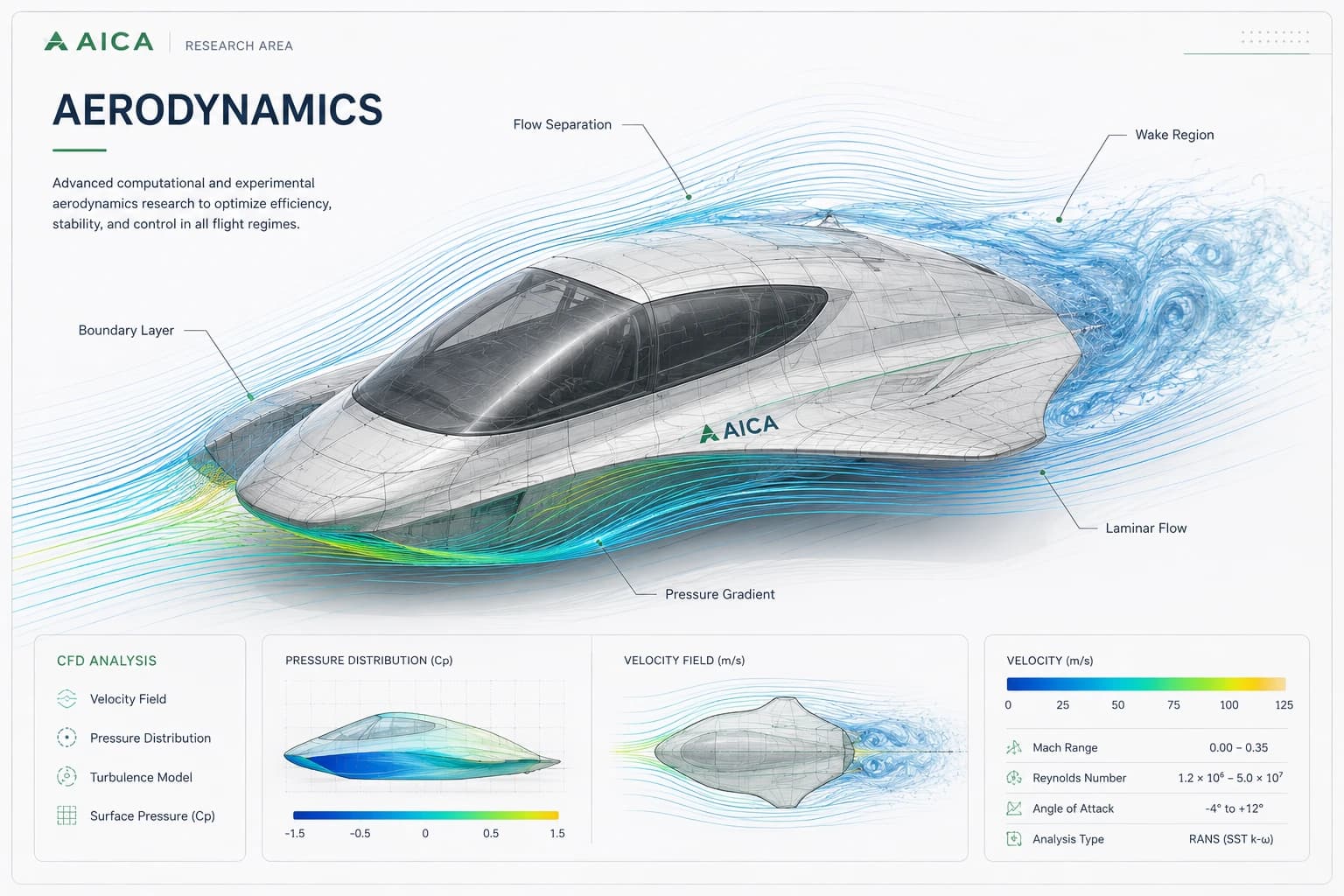
Aerodynamics
Research into how vehicle form, airflow, and operating conditions influence aerodynamic behaviour and stability.
Current focus
Flow behaviour, pressure distribution, stability, and vehicle configuration analysis.
Research
AICA research focuses on understanding the aerodynamic, energetic, structural, control, acoustic, and manufacturing challenges required to develop a viable advanced air mobility platform.
The programme combines simulation, systems engineering, analytical modelling, experimental validation, and progressive hardware development.
Research areas
Each area addresses a distinct technical problem while contributing evidence to the wider vehicle and programme architecture.
Research into how vehicle form, airflow, and operating conditions influence aerodynamic behaviour and stability.
Current focus
Flow behaviour, pressure distribution, stability, and vehicle configuration analysis.
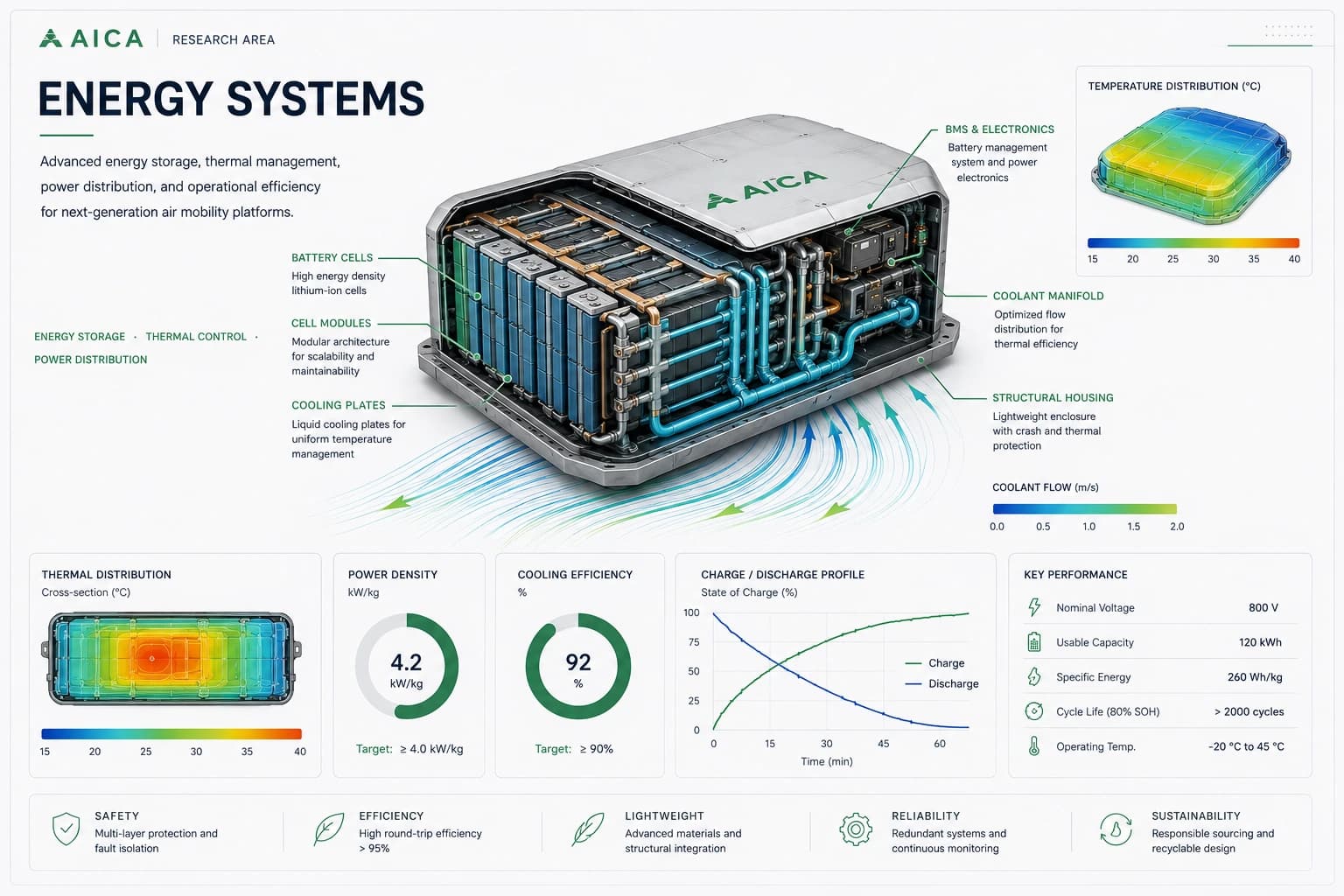
Platform-level investigation of energy storage, delivery, thermal behaviour, and safe system integration.
Current focus
Energy storage architecture, power distribution, thermal management, and system safety.
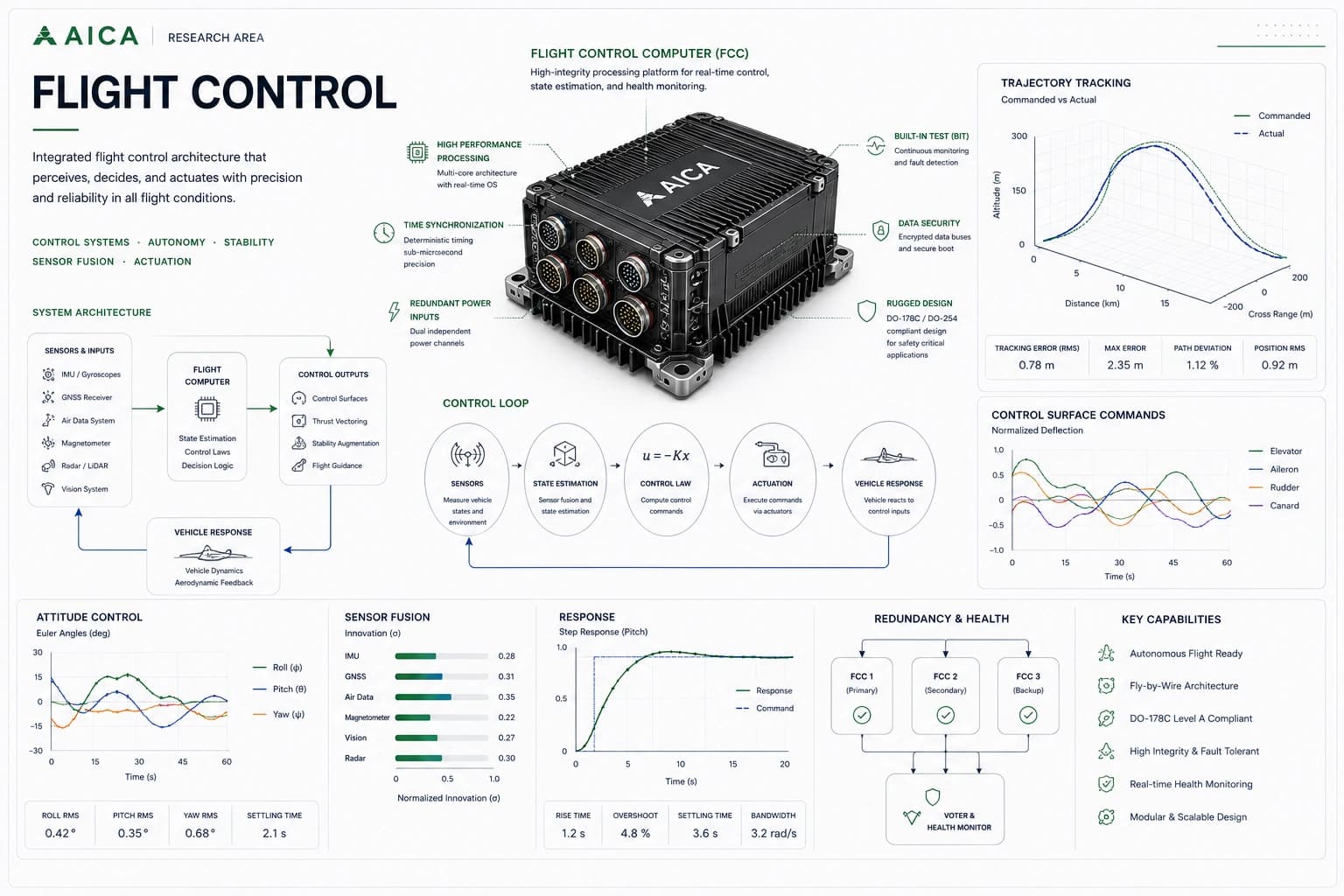
Development of control concepts that connect sensing, estimation, decision logic, and vehicle response.
Current focus
Sensor fusion, state estimation, control logic, redundancy, and system integration.
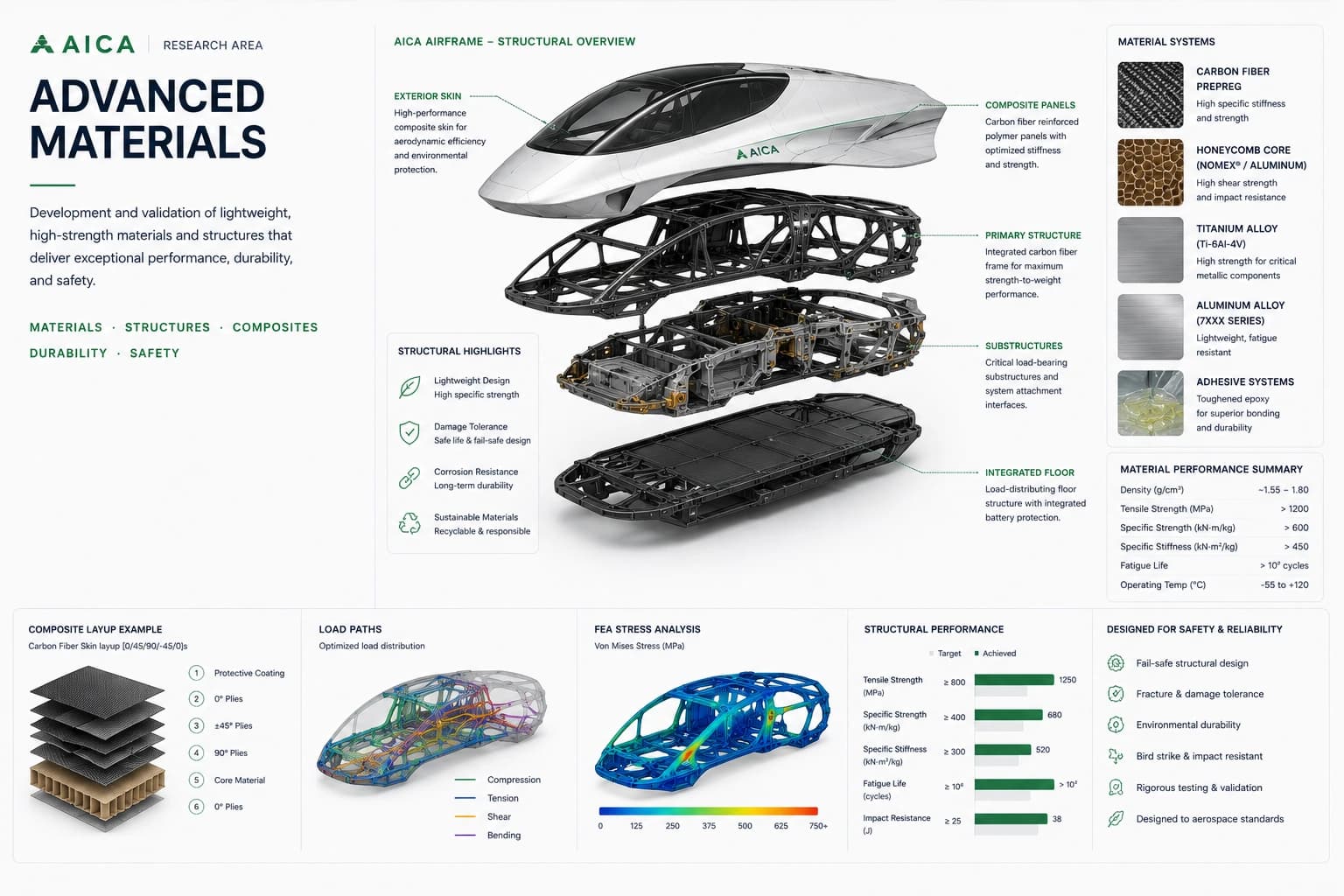
Assessment of structural architectures and material systems against programme-level engineering constraints.
Current focus
Lightweight structures, composite systems, durability, and load-path optimisation.
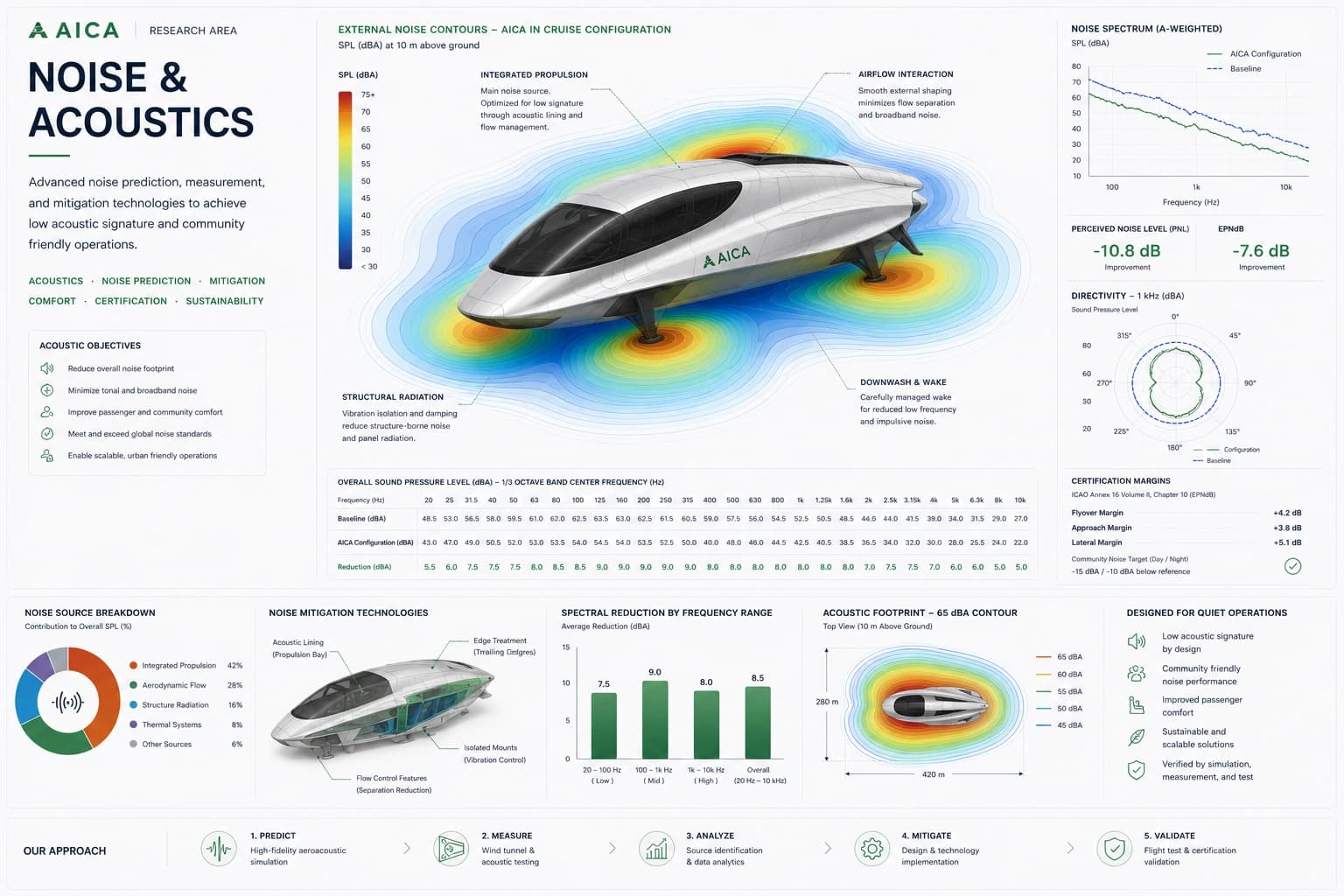
Study of potential noise sources, propagation, measurement methods, and mitigation approaches.
Current focus
Acoustic modelling, source identification, mitigation strategies, and operational noise studies.
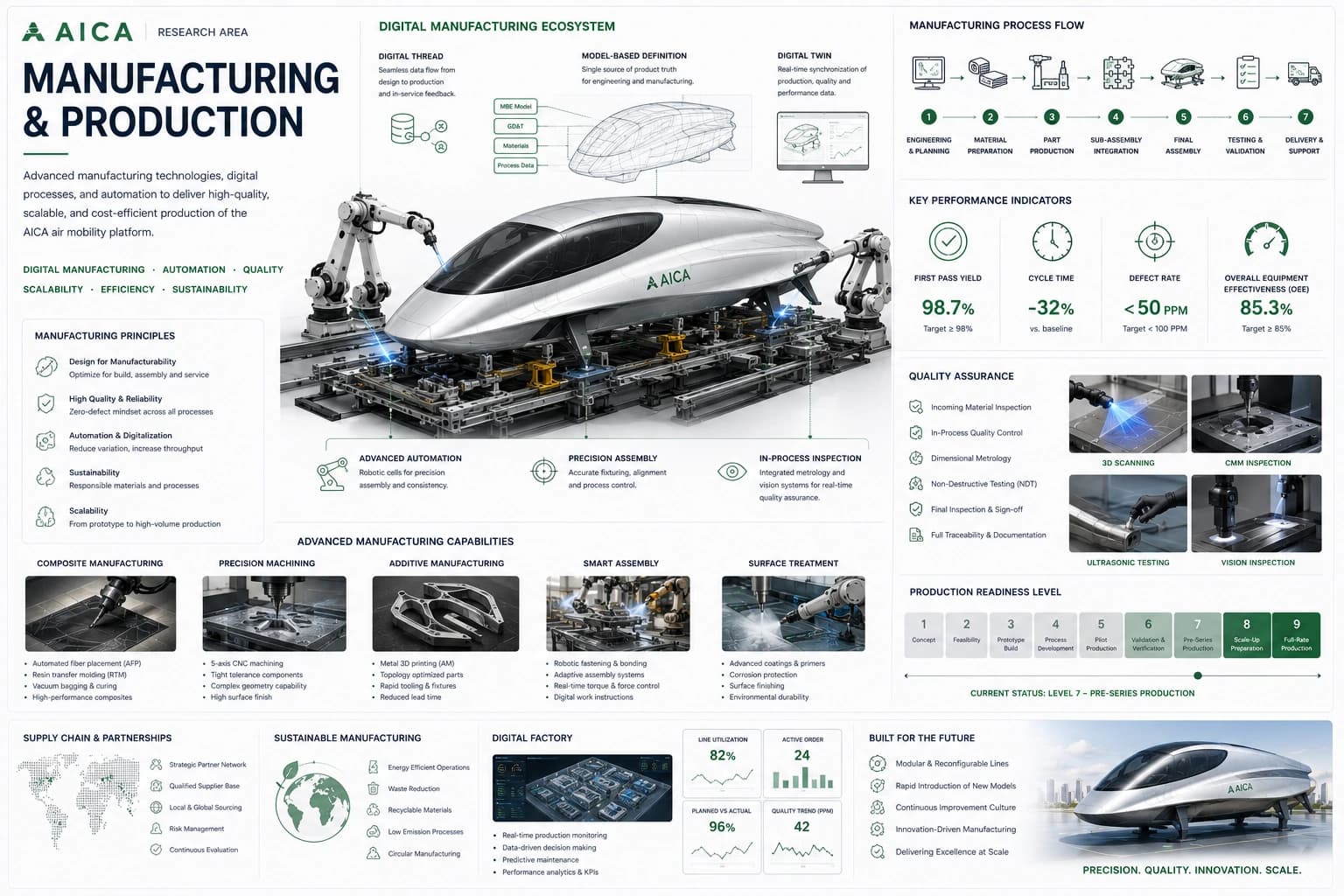
Research into how validated designs could progress toward controlled, repeatable fabrication and assembly.
Current focus
Digital manufacturing, assembly strategy, inspection, repeatability, and scalability.
Current questions
These are active engineering questions to be investigated, compared, and validated—not statements of established vehicle capability.
How can the vehicle geometry minimise aerodynamic losses across representative operating conditions?
How should energy storage and thermal management be integrated at platform level?
Which control architecture provides the required stability, redundancy, and fault awareness?
Which structural concepts provide the best balance between mass, stiffness, durability, and manufacturability?
How can acoustic impact be understood and reduced before physical flight testing?
Which manufacturing methods can transition from prototype development to repeatable production?
Methodology
Establish the engineering question, assumptions, constraints, and success criteria.
Use analytical models, simulation, CAD, system models, and digital tools.
Evaluate competing architectures and identify technical trade-offs.
Confirm assumptions through bench testing, subsystem experiments, and later physical prototypes.
Record methods, limitations, results, and design decisions for future programme stages.
AICA separates early engineering analysis from later physical validation so the maturity of each finding remains clear.
Level 1
Level 2
Level 3
Level 4
Performance figures should be treated as targets or predictions until validated at the appropriate evidence level.
Research outputs
Available programme pages connect current questions to development planning, ongoing notes, and documented engineering standards.
Review the open questions directing current programme studies.
See how research evidence informs staged programme development.
Follow design decisions, observations, and programme updates.
Access programme methods, standards, and engineering records.
AICA's engineering programme is built around reducing uncertainty step by step. Models inform decisions, experiments challenge assumptions, and physical testing ultimately determines what the platform can achieve.