01
A platform-level systems approach
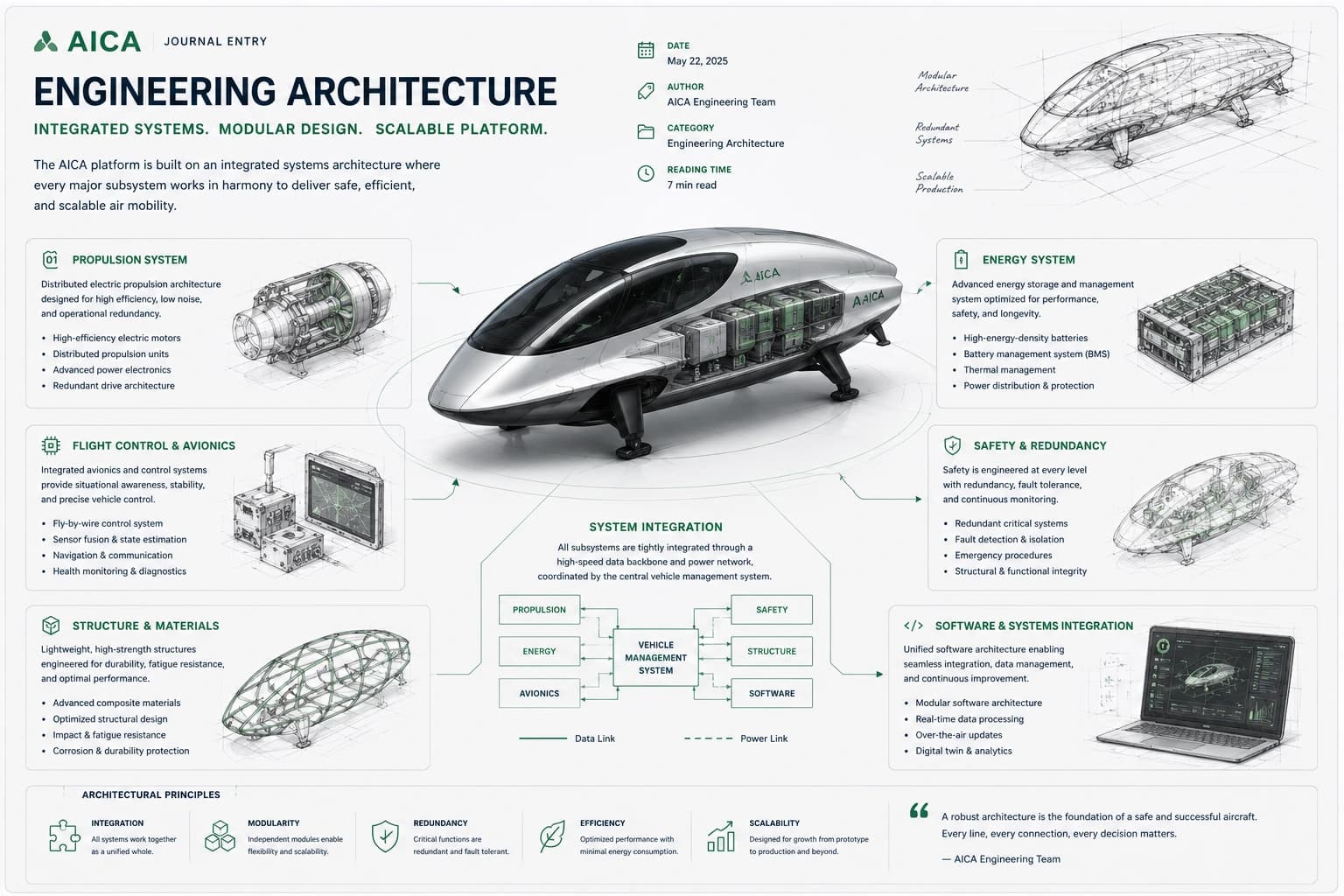
AICA is treated as an integrated platform rather than a collection of independent subsystems. Propulsion, energy, control, safety, structure, and software affect one another through shared loads, interfaces, operating limits, monitoring needs, and failure responses.
Architecture work therefore focuses on relationships and dependencies before individual subsystem decisions are treated as fixed.
02
Interfaces and integration dependencies
Subsystem interfaces define where assumptions in one engineering area create requirements or constraints in another. The public architecture record focuses on these system-level relationships without disclosing confidential propulsion details.
- energy delivery, thermal behaviour, and monitoring
- control authority, sensing, software, and fault response
- structural loads, packaging, access, and inspectability
- safety boundaries across normal and off-nominal conditions
03
Architecture maturity
The architecture remains subject to continued analysis, simulation, trade studies, and later physical validation. A coherent system model can support engineering decisions, but it does not by itself demonstrate subsystem or vehicle performance.
Future integration decisions should be traced to documented interface requirements and evidence appropriate to the maturity of each subsystem.